Best Ping Pong Balls (3-Star): What to Buy for Training
By RallyRove · 7 min read · Updated June 2026
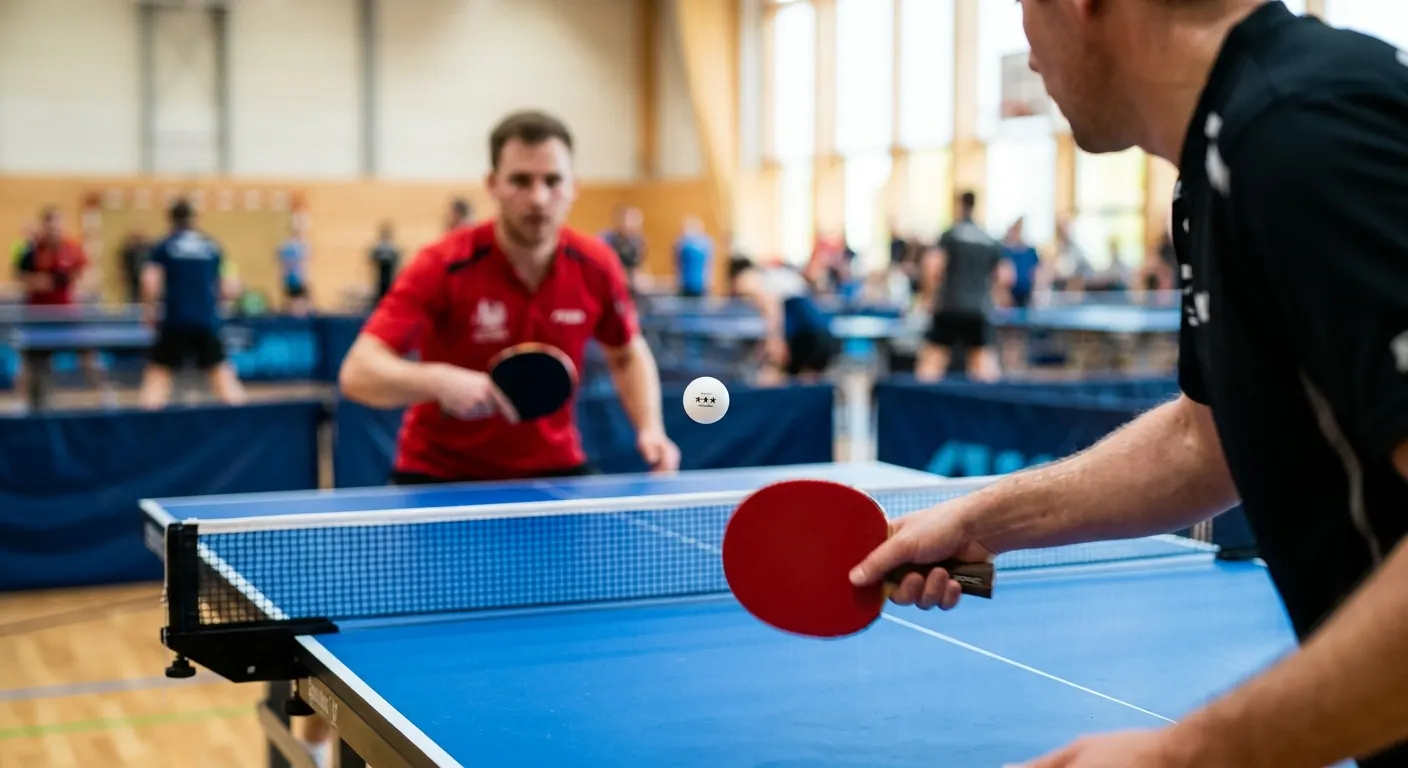
The table tennis ball market changed completely in 2015 when the ITTF mandated the switch from celluloid to poly (plastic) balls, and the quality range within the 3-star category has widened considerably since then. Not every ball labeled 3-star delivers the bounce consistency and roundness tolerance that the rating implies, and the difference between a genuine tournament-grade ball and a cheap 3-star imposter shows up in irregular bounces, seam-related trajectory changes, and cracking under normal play. This guide identifies the real 3-star balls worth buying for match practice, club training, and robot sessions across different use cases and budgets.
Quick answer
The Butterfly R40+ is the best 3-star ball for serious training and match practice, with seamless construction and tight roundness tolerances that produce consistent bounce and predictable spin. For club training at volume, the JOOLA Prime and DHS D40+ deliver reliable performance at a lower cost. Use XuShaoFa bulk packs for robot sessions where balls crack often.
This guide contains affiliate links. RallyRove may earn a commission at no cost to you.
What changed when table tennis went poly
The 2015 switch from celluloid to poly balls was not purely cosmetic. Poly balls are slightly larger, slightly heavier, and produce noticeably less spin at the same swing speed compared to the old celluloid standard. The harder plastic surface grips rubber differently than celluloid did.
For recreational players the difference is subtle. For competitive players the change required adjustments to serve spin volume, loop contact timing, and return depth calibration. The poly ball game is slightly slower and slightly lower-spin at the highest levels, which shifted some tactical balance away from very high-spin servers.
The transition also created a quality problem. Many manufacturers rushed poly balls to market without the same quality control as their celluloid predecessors. The result was a wide range in actual quality within the 3-star label. Buying from established manufacturers with established quality control, Butterfly, JOOLA, DHS, and Nittaku, is the most reliable way to get what the 3-star label claims.
Butterfly R40+: the reference standard
The Butterfly R40+ 3-Star Table Tennis Ball (12-pack) is the most consistent 3-star poly ball currently available for training and match use. Its seamless construction eliminates the seam-related bounce irregularities that affect seamed balls, and Butterfly's quality control ensures tight roundness and hardness tolerances across the pack.
The R40+ is ITTF approved, meaning it meets the technical standards required for official sanctioned competitions. For serious players who want their training sessions to replicate tournament conditions accurately, the R40+ is the cleanest choice. The premium over JOOLA and DHS balls is real but modest on a per-ball basis.
Butterfly does not produce many table tennis equipment categories where their product is clearly superior to all competitors. In balls, the R40+ has held that position consistently since the poly transition. The seamless construction is the differentiating factor for players who value bounce predictability above all.

Butterfly R40+ 3-Star Table Tennis Ball (12-pack)
The reference-standard poly ball for serious training and competitive club play. Seamless construction and tight roundness tolerances produce consistent bounce and predictable spin response.
JOOLA Prime and DHS D40+: the value choices
The JOOLA Prime 3-Star Table Tennis Ball (12-pack) is the most practical choice for club players and serious recreational players who go through balls at volume. ITTF approved, available in both white and orange, and priced below Butterfly, it delivers reliable bounce consistency that is more than adequate for regular training and club match play.
The DHS D40+ 3-Star Table Tennis Ball (6-pack) is particularly relevant for players who want to train with the official ball of major ITTF World Tour events, as DHS has supplied their D40+ at numerous high-level competitions. The feel is slightly harder and the surface slightly different from Butterfly, but the roundness consistency and ITTF certification put it in the same tier for practical purposes.
For most club and serious recreational players, the meaningful choice is between the Butterfly premium and the JOOLA or DHS value options. The Butterfly advantage is real but incremental. A player who cannot discern the difference in a blind bounce test, and most recreational players genuinely cannot, is better served by the JOOLA Prime at the lower price point.

JOOLA Prime 3-Star Table Tennis Ball (12-pack)
ITTF-approved 3-star poly ball from one of the largest table tennis brands in the US, offering consistent performance at a lower per-ball cost than Butterfly.

DHS D40+ 3-Star Table Tennis Ball (6-pack)
The official ball of numerous ITTF World Tour events, widely used in Chinese and international competition. Seamless construction with a smooth, consistent surface.
Nittaku Premium: the consistency specialist
The Nittaku Premium 3-Star Table Tennis Ball (12-pack) comes from Japanese manufacturing traditions with a reputation for the tightest roundness tolerances in the market. It is the official ball at multiple prestigious Asian tournament events and is used by players who prioritize bounce consistency above all other factors.
The Nittaku ball feels slightly harder than Butterfly, and the surface interacts with rubber slightly differently due to its manufacturing process. For players accustomed to Butterfly, there is a brief adjustment period. For players who train primarily on Nittaku balls and compete on them, the consistency is exceptional.
At a price point between Butterfly and JOOLA, Nittaku Premium is worth trying for players who want an alternative to Butterfly without dropping to the JOOLA price tier. It earns its premium on roundness consistency and durability.

Nittaku Premium 3-Star Table Tennis Ball (12-pack)
Japanese-manufactured 3-star ball with a reputation for the tightest roundness tolerances in the market, used as the official ball at numerous high-level Asian tournaments.
Bulk training balls for robot sessions
Robot practice and multi-ball coaching sessions put balls through a different kind of stress than match play. Balls cycle through a feed mechanism repeatedly, bounce hard off the table at low angles, and occasionally hit the legs of the table or the net post. The cracking rate is meaningfully higher under these conditions.
Using premium Butterfly or Nittaku balls in a robot basket is an expensive approach when the same training benefit is available from the XuShaoFa 3-Star Training Balls (100-pack) 100-pack. The roundness consistency of bulk training balls is lower than premium tournament balls, but it is sufficient for stroke repetition drills. The reduced per-ball cost makes replacing cracked balls economically manageable.
A practical approach: use premium balls for serve-practice sessions and match-simulation drills where ball behavior matters. Use the bulk training balls for robot footwork drills and extended stroke repetition sessions. Keep the two stocks separate and rotate the robot stock out when crack rates increase.
XuShaoFa 3-Star Training Balls (100-pack)
High-volume training ball pack for multi-ball practice and robot feeding. Reasonable bounce consistency at a bulk price that makes large-basket practice economical.
JOOLA Prime 3-Star Table Tennis Ball (12-pack)
ITTF-approved 3-star poly ball from one of the largest table tennis brands in the US, offering consistent performance at a lower per-ball cost than Butterfly.
White versus orange: when color matters
White is the standard in formal competition. Orange offers better visibility against some backgrounds, particularly at venues with non-standard lighting or in outdoor play where a white ball can blend against a light sky.
For home training, pick whichever color your table and lighting environment makes easiest to see clearly. A Butterfly R40+ 3-Star Table Tennis Ball (12-pack) white ball against a standard blue table surface is easy to track in most lighting. On a non-regulation table or in a venue with a light background behind the player, orange is the practical choice.
Butterfly R40+ 3-Star Table Tennis Ball (12-pack)
The reference-standard poly ball for serious training and competitive club play. Seamless construction and tight roundness tolerances produce consistent bounce and predictable spin response.
Featured in this guide
Butterfly R40+ 3-Star Table Tennis Ball (12-pack)
The reference-standard poly ball for serious training and competitive club play. Seamless construction and tight roundness tolerances produce consistent bounce and predictable spin response.
JOOLA Prime 3-Star Table Tennis Ball (12-pack)
ITTF-approved 3-star poly ball from one of the largest table tennis brands in the US, offering consistent performance at a lower per-ball cost than Butterfly.
DHS D40+ 3-Star Table Tennis Ball (6-pack)
The official ball of numerous ITTF World Tour events, widely used in Chinese and international competition. Seamless construction with a smooth, consistent surface.
Nittaku Premium 3-Star Table Tennis Ball (12-pack)
Japanese-manufactured 3-star ball with a reputation for the tightest roundness tolerances in the market, used as the official ball at numerous high-level Asian tournaments.
XuShaoFa 3-Star Training Balls (100-pack)
High-volume training ball pack for multi-ball practice and robot feeding. Reasonable bounce consistency at a bulk price that makes large-basket practice economical.
FAQ
Frequently asked questions
What does 3-star mean on a table tennis ball?+
Three-star is the highest rating a table tennis ball can carry, indicating it meets standards for roundness, weight, hardness, and bounce consistency. One-star and two-star balls are for recreational and training use. For competitive play at any sanctioned level you need 3-star balls. The ITTF maintains a separate approved ball list for tournament use that is stricter than the manufacturer self-rating.
Are all 3-star table tennis balls the same quality?+
No. The 3-star rating is assigned by the manufacturer, not independently verified, and quality varies significantly between brands. Balls from Butterfly, JOOLA, DHS, and Nittaku reflect real quality control investment. Generic or unrecognized brands labeled 3-star often do not meet the same roundness or hardness tolerances. Stick with recognized manufacturers for training and match use.
How many table tennis balls do I need to buy?+
For regular match practice and hitting sessions, a pack of 12 to 24 is sufficient. For multi-ball training with a coach who feeds from a basket, 60 to 100 balls gives you enough for a full session. For robot training, 100 balls is the practical minimum for a comfortable uninterrupted session, and balls crack faster under robot use, so buy in larger quantities.
Why do table tennis balls crack?+
Poly balls crack from impact stress, particularly hard impacts against hard surfaces like table corners, net posts, and the floor. They also crack from thermal stress when stored in very cold conditions and then brought into a warm environment quickly. Celluloid balls were somewhat more durable against cracking; poly balls are slightly more prone to it. Discard cracked balls immediately as they feed inconsistently and can jam robot mechanisms.