When to Replace Your Table Tennis Rubber
By RallyRove · 8 min read · Updated June 2026
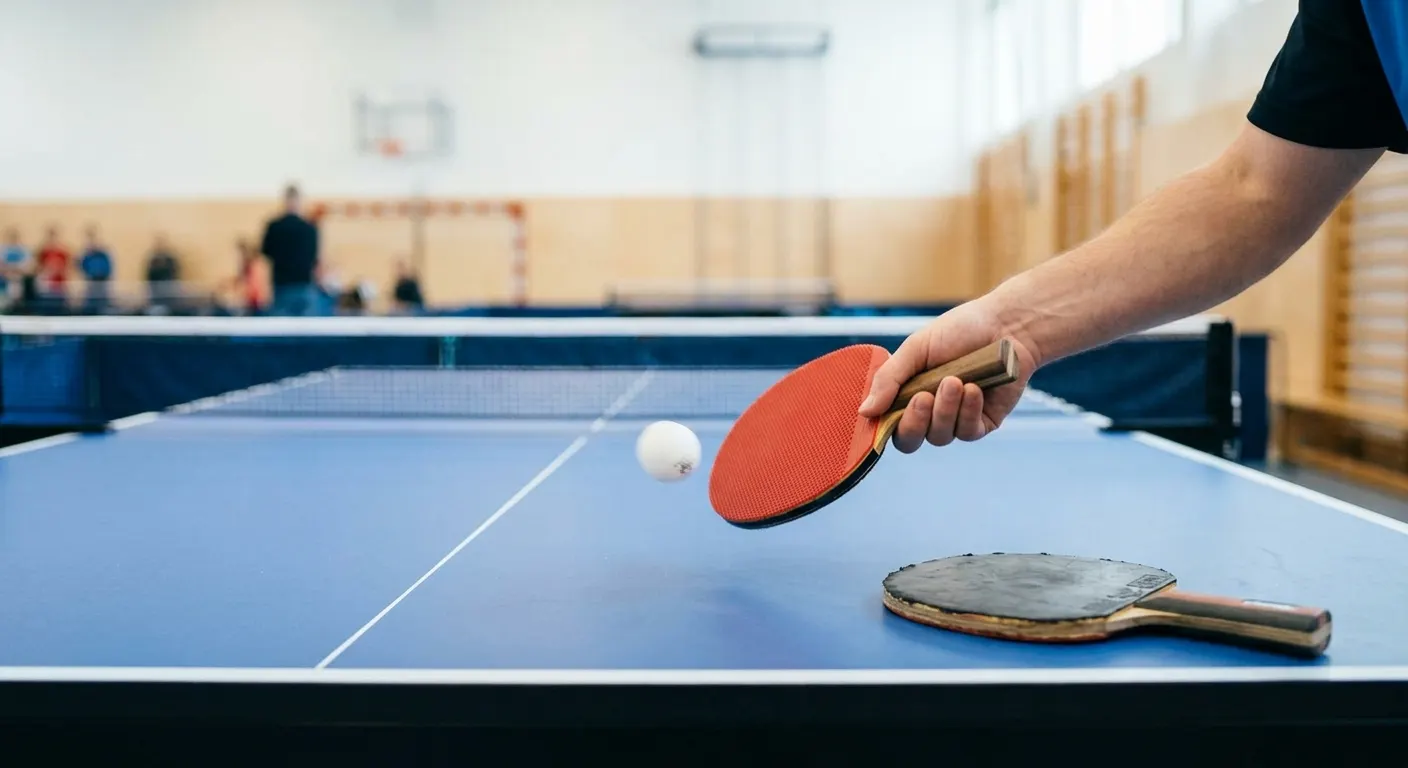
Table tennis rubber is a consumable, and understanding when it has worn out is the single most important maintenance concept in the sport. A competitive player practicing five or more hours per week is typically replacing rubber every two to four months. A serious recreational player doing two to three hours per week might get four to six months of genuine performance. But the clock is not the right measure, and a date on a calendar will not tell you what your rubber is actually doing. This guide walks through the real signs that your rubber has given up, explains what happens to different rubber types as they age, and points you toward the right replacement depending on your playstyle. If your loops feel flat, your serves are not kicking, or balls are flying long without reason, the rubber is almost certainly the answer.
Quick answer
Replace your table tennis rubber when the topsheet loses tackiness, when loops produce noticeably less spin, or when balls fly long on strokes that used to land cleanly. Players training five or more hours a week should expect to replace every two to four months; recreational players can expect four to six months of real performance.
This guide contains affiliate links. RallyRove may earn a commission at no cost to you.
How rubber degrades over time
Table tennis rubber degrades through two distinct mechanisms, and both happen simultaneously. The topsheet surface loses its grip or tackiness from contact with the ball, oil from your hands, and airborne dust that fills microscopic pores in the rubber. The sponge underneath loses its elastic rebound as the polymer structure fatigues from repeated compression and release during strokes.
For non-tacky European rubbers like the Butterfly Tenergy 05 or the Yasaka Rakza 7, the topsheet degradation shows up as a reduction in the grippy, slightly porous texture that generates spin through friction. The surface begins to feel slightly slicker, and balls come off with less topspin than the same swing produced a few months ago.
For tacky Chinese rubbers like the DHS Hurricane 3, the degradation is more visible. A fresh Hurricane 3 will stick briefly to a ball pressed against it. A worn one will not. The tackiness is the mechanism, and when it goes, the rubber is done.
Sponge fatigue is less visible but equally real. The sponge absorbs impact energy and rebounds it into the ball, contributing to both speed and that characteristic catapult feeling on a well-timed loop. Old sponge feels dead, produces less vibration feedback, and reduces the energy transfer that makes a good loop kick off the rubber. You may not be able to see this change, but you will feel it.
The clearest signs that replacement is overdue
The most reliable diagnostic is your loop spin. Hold a ball against the rubber and rotate it. Fresh rubber grips and resists. Worn rubber lets it slide. Do this monthly as a quick check.
A second sign is ball trajectory on serves. Table tennis players who develop good topspin serves and backspin serves build muscle memory for how those serves perform. When serves that used to skid low and kick start bouncing higher and slower, the rubber has lost spin potential. The motion did not change; the rubber did.
The third sign is uncontrolled long balls. A rubber that has gone dead on the sponge no longer absorbs excess pace on blocks and counter-hits. Balls that used to land cleanly on the table start going long with the same swing. This is the sponge failure sign, not the topsheet.
If you are experiencing any of these, it is time to replace. The Butterfly Tenergy 05 costs significantly less per month than a coaching session. Waiting on rubber replacement to save money is one of the most counterproductive habits in competitive table tennis, because degraded rubber actively prevents skill development.
Replacement timelines by player type
Competitive players at the USATT-registered level, training five or more hours per week and playing in leagues or tournaments, should budget for rubber replacement every two to three months. At this intensity, even the most durable rubbers like DHS Hurricane 3 will have lost meaningful performance within that window.
Serious recreational players who train two to four hours per week can reasonably expect four to six months of genuine performance from a quality rubber. This assumes the rubber is cleaned after every session and stored with protective covers. Without cleaning and covers, expect to shorten that timeline.
Players who only pick up a paddle every few weeks for casual play can often stretch rubber further, simply because it sees less contact. But rubber also oxidizes with air exposure over time, so a rubber that has sat unused for a year or more may have degraded without ever being played.
Protecting rubber between sessions
The simplest maintenance step is also the most overlooked: clean and cover the rubber after every session. Use a dedicated rubber cleaner, press the foam sponge applicator gently across the topsheet in even strokes, and store the paddle with protective plastic covers pressed flat against each side.
This removes the ball residue, hand oils, and dust that accelerate topsheet degradation. For tacky Chinese rubbers like DHS Hurricane 3, the cleaner also preserves tackiness longer. For non-tacky European rubbers like Tibhar Evolution MX-P or Yasaka Rakza 7, the protection is primarily against topsheet glazing from dust and oxidation.
A rubber that is properly cleaned and covered will last meaningfully longer than one stored bare in a case. The investment in a cleaner kit is recovered in extended rubber life within a single replacement cycle.
Which rubber to buy when you replace
Replacement is the ideal moment to reassess whether your current rubber is right for where your game is now, not just where it was when you bought it. A player who started on the Xiom Vega Europe six months ago and has developed consistent loop mechanics may be ready for the Yasaka Rakza 7 or the Tibhar Evolution MX-P.
For advanced players with solid technique replacing their forehand rubber, the Butterfly Tenergy 05 remains the most thoroughly proven high-performance rubber in the sport. Players who want to step up further and have the technique to support it can consider the Butterfly Dignics 09C, which carries a higher price but a genuinely higher spin ceiling.
Defenders and all-round players using long-pips on one side should replace both sides at different intervals since they wear differently. The long-pips side of a combination bat, like the Dr. Neubauer Gorilla, wears differently than an attacking rubber and should be inspected independently for pip wear and base sheet condition.
Featured in this guide

Butterfly Tenergy 05
The benchmark offensive rubber used at the highest levels of the game for two decades. Spring Sponge technology generates exceptional topspin and a stable arc on full-swing loops.

DHS Hurricane 3
The dominant rubber of the Chinese national team and arguably the most influential table tennis rubber ever made. Tacky topsheet with a dense sponge generates heavy loop spin through controlled, deliberate mechanics.

Yasaka Rakza 7
A high-performance non-tacky rubber that bridges the gap between beginner and elite. Aggressive spring-sponge construction at a price point well below Butterfly premiums.
Tibhar Evolution MX-P
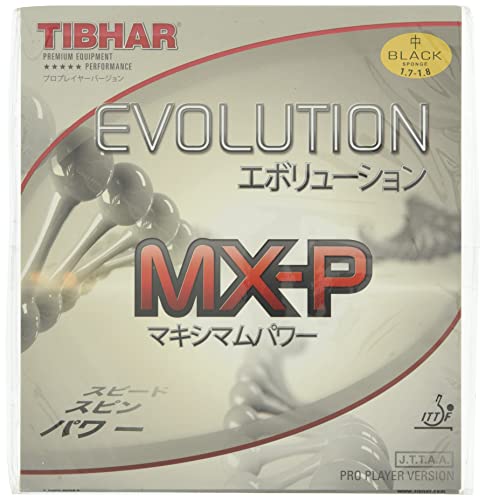
German-engineered high-tension rubber with a medium-hard sponge and explosive rebound, designed for attacking players who loop at full power.

Butterfly Dignics 09C
The flagship rubber from Butterfly that surpassed Tenergy at the top levels. Harder sponge and a high-tension topsheet generate elite spin and speed from a compact swing.
Keep reading
Related comparisons
Related roundups
FAQ
Frequently asked questions
How do I know if my table tennis rubber is dead?+
Press a ball against the rubber and rotate it. Fresh rubber grips and resists; dead rubber lets the ball slide freely. Also check your loop spin: if balls that used to kick with heavy topspin are now going flat, and serves that used to skid low are now bouncing high, the rubber has worn out. Both topsheet grip loss and sponge fatigue can cause these symptoms.
Does expensive rubber wear out faster than cheap rubber?+
Premium rubbers like Butterfly Tenergy or Dignics often degrade faster than tacky Chinese rubbers at equivalent training volumes, because their high-tension topsheets are more sensitive to oxidation and friction wear. DHS Hurricane 3 is notably durable by comparison. However, the performance gap between fresh premium rubber and the alternatives is large enough that the replacement cost is justified for competitive players.
Can I make rubber last longer without cleaning it?+
Not meaningfully. Without cleaning and covering after sessions, topsheet degradation accelerates because ball residue, hand oils, and dust fill the pores that generate friction and spin. A covered and cleaned rubber can realistically last 25 to 50 percent longer than one stored bare. The cleaning investment is recovered in extended rubber life within one replacement cycle.
Should I replace both rubbers at the same time?+
Not necessarily. Most players are harder on one side than the other, and rubbers can wear at different rates on forehand versus backhand. Inspect each side independently using the ball-rotation test. If one side is dead and the other still has grip, replace just the worn side. Replacing both simultaneously is fine if you want a matched fresh setup, but it is not required.
What happens if I keep playing on dead rubber?+
Playing on dead rubber actively harms your technique development. When the rubber cannot generate the spin and speed response your stroke is designed to produce, you unconsciously compensate by swinging harder or altering your contact angle. Those compensations become habits that are harder to unlearn later. Dead rubber is a training liability, not just a performance limitation.